
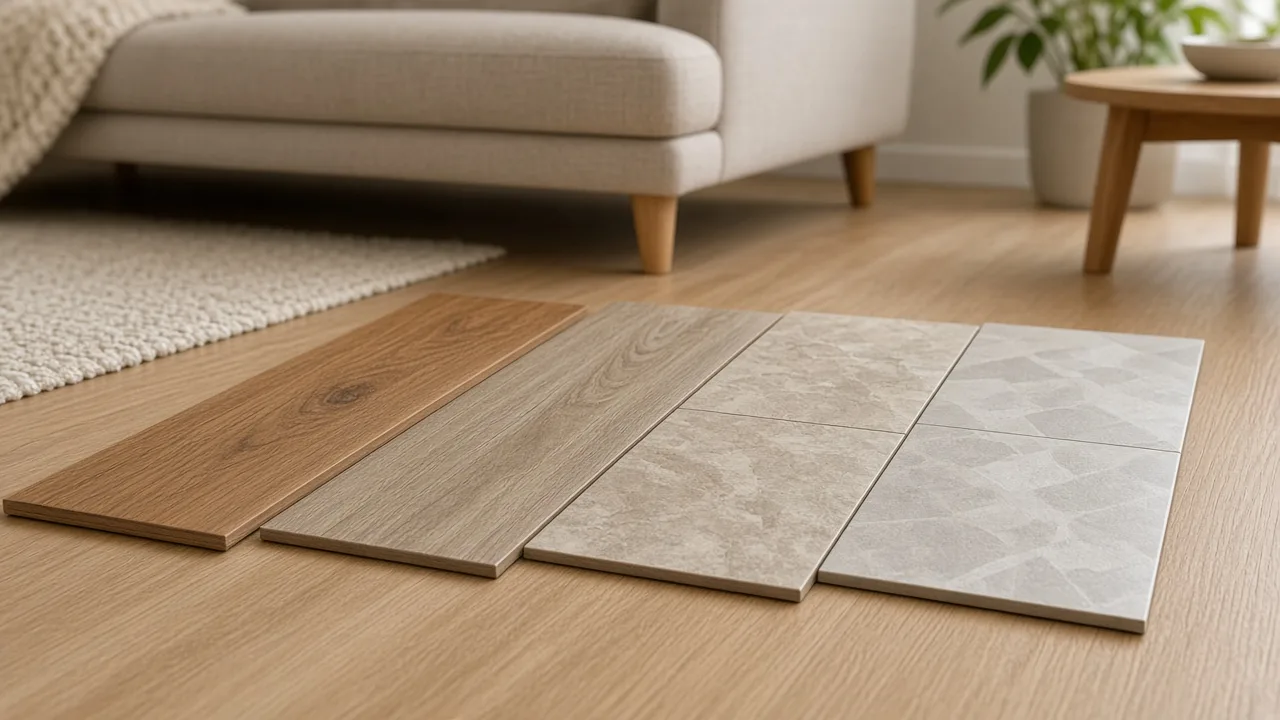
Hardwood
Solid hardwood offers timeless warmth and can be sanded and refinished several times, giving it a very long life. It is sensitive to moisture and can scratch or dent, so it is less suitable for bathrooms and basements. Engineered hardwood, with a real wood veneer over a plywood core, handles humidity changes better and can be installed in more situations.
Laminate
Laminate uses a photographic layer over a fiberboard core to mimic wood or stone. It is affordable, scratch-resistant and straightforward to install, often as a floating floor. Traditional laminate can swell if water seeps in, although water-resistant versions are available. It cannot be refinished.
Luxury Vinyl Plank and Tile
Luxury vinyl is popular for its realistic looks, comfort underfoot and strong water resistance, making it a fit for kitchens, bathrooms and laundry rooms. Quality varies, so look at wear layer thickness and warranty. Heavy furniture and sunlight can cause dents or fading over time.
Ceramic and Porcelain Tile
Tile is extremely durable and waterproof, ideal for bathrooms, entryways and kitchens. It can feel cold and hard, and grout needs periodic cleaning and sealing. Porcelain is denser and more moisture-resistant than standard ceramic. Installation requires a flat subfloor and skilled labor.
Carpet
Carpet provides warmth, softness and sound absorption in bedrooms and living areas, but it can trap allergens and stains more readily, so it requires regular cleaning.
Factors to Consider
- Budget: Consider both material and installation costs.
- Traffic and pets: High-traffic areas need hard-wearing surfaces.
- Moisture: Choose water-resistant materials for wet areas.
- Subfloor: Concrete slabs and existing floors affect which products work.
- Comfort and noise: Underlayment can improve both.
- Maintenance: Match upkeep to how much time you want to spend.
Prepare Properly
Allow materials to acclimate to your home as the manufacturer directs, and make sure the subfloor is clean, flat and dry. Request samples and view them in your own lighting before you decide, and ask installers about transitions between rooms for a seamless look.
When in doubt, order a few full-size samples and live with them for a week. Look at them in morning light and at night, drop a spill on them and see how they feel with bare feet. A small test often prevents an expensive regret.
p>